
SolutionMall
Partner CRM
  • English
  • 中文
  • Français
  • Español
  • Português
  • Русский
Browse Products
⛏️SOLUTION 07 · MINING SAFETY

Mining Safety & Emergency Response Solution

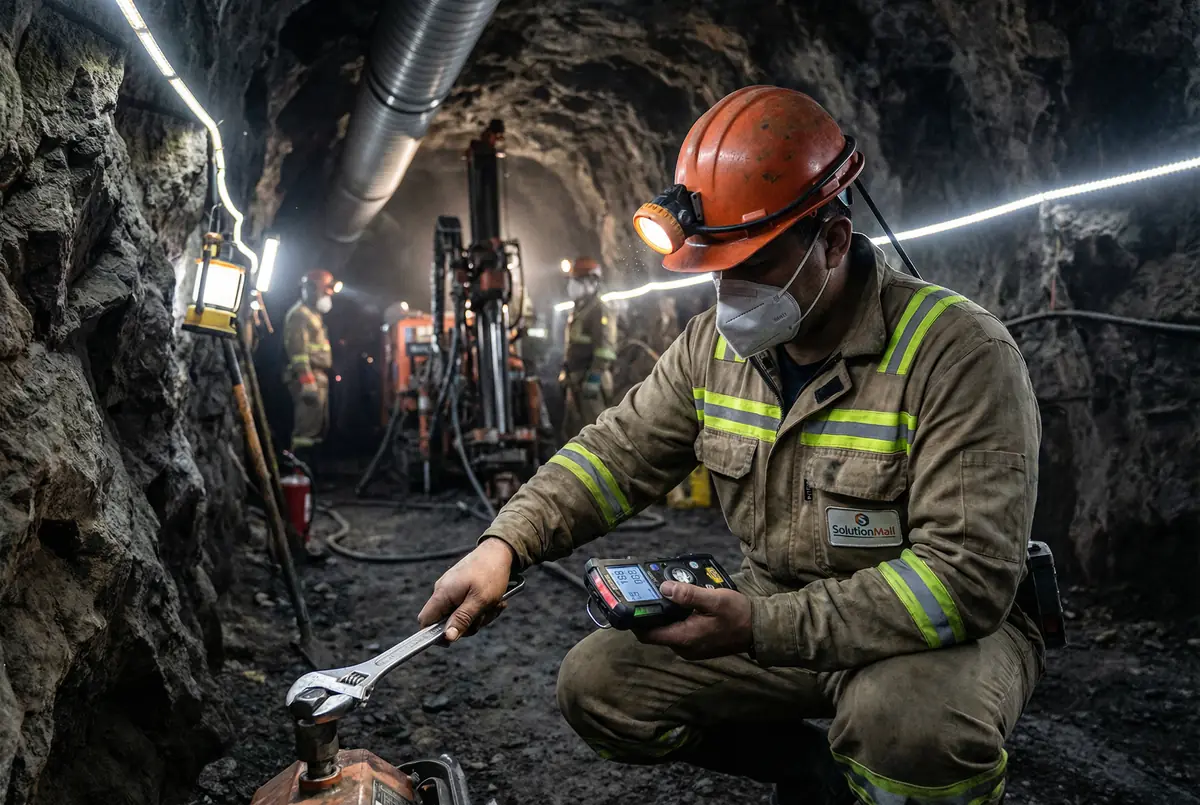
Comprehensive gas detection, structural monitoring, emergency communication, and personal protective equipment solutions for underground mines, open-pit operations, and mineral processing facilities to protect workers and ensure regulatory compliance.

4-Gas
SIMULTANEOUS DETECTION
MSHA
KEY CERTIFICATION
SIL 2
SAFETY LEVEL
Mining Safety
⛏️

Gas Hazard Prevention & Emergency Response

⚠️
Gas Hazard Prevention
Multi-gas detectors continuously monitor methane, CO, H2S, and O2 levels in underground workings. Real-time alerts and automatic ventilation control prevent explosive atmospheres and toxic gas accumulation before they reach dangerous levels.
🏔️
Structural Safety Monitoring
Ground movement sensors, roof convergence monitors, and seismic detectors provide early warning of ground instability, rockfall, and seismic events, giving workers time to evacuate safely and preventing catastrophic collapses.
🚨
Emergency Response Readiness
Integrated emergency communication systems, personal emergency devices, and rescue equipment ensure rapid response to incidents. Automated mustering systems account for all personnel within minutes of an emergency declaration.
🏗️

Mining Safety System Architecture

Field Sensors 🔴 Gas Detectors 📳 Seismic Sensors 💨 Dust Monitors Safety Systems 📢 Emergency Comm 💨 Ventilation Control 📍 Personnel Tracking 🔔 Alarm Systems Control & Management 🏭 Mine Control Room 🚨 Emergency Response 📋 Compliance Reports Data Flow Emergency Path
🔩

Key Products in This Solution

🔴
4-Gas Detector
Gases: CH4/CO/H2S/O2 | Alarm: 10%LEL/25ppm/10ppm/19.5% | MSHA
📡
Fixed Gas Monitor
Sensors: Catalytic/EC/IR | Response: <30s | SIL 2 Rated
💨
Dust Concentration Monitor
Range: 0-1000mg/m³ | Particle: PM2.5/PM10 | Real-time
📳
Seismic Monitor
Frequency: 1-1000Hz | Sensitivity: 0.001mm/s | Wireless
📐
Roof Convergence Monitor
Range: 0-500mm | Accuracy: ±0.1mm | Continuous
🏠
Emergency Refuge Chamber
Capacity: 20 persons | Duration: 96h | Self-contained
😷
Self-Contained Breathing Apparatus
Duration: 60min | Pressure: 300bar | EN 137
🚑
Mine Rescue Kit
Stretcher, First Aid, Oxygen, Communication | MSHA
🔦
Intrinsically Safe Torch
Zone 1/21 | ATEX/IECEx | Lumen: 500lm | IP68
📍
Personnel Tracking System
RFID/UWB | Accuracy: ±1m | Real-time | 500 tags
⛽
Methane Drainage Monitor
CH4: 0-100% | Flow: 0-100m/s | Pressure: 0-50kPa
🔊
Noise Level Meter
Range: 30-130dB | Frequency: 20Hz-20kHz | IEC 61672
🔄

Standard Operating Workflow

1
Hazard Assessment
Identify gas, structural, dust, and noise hazards in all work areas
2
Sensor Deployment
Install fixed gas monitors, seismic sensors, and dust monitors at critical points
3
Baseline Calibration
Calibrate all instruments against certified reference gases and standards
4
Alarm Threshold Setting
Configure alarm levels per regulatory requirements and risk assessment
5
Personnel Training
Train all workers on gas detector use, emergency procedures, and evacuation routes
6
Emergency Drill
Conduct regular emergency response drills to test communication and evacuation
7
Continuous Monitoring
24/7 automated monitoring with remote alerts to control room and supervisors
8
Compliance Reporting
Generate regulatory compliance reports and maintain calibration records
📋

Applicable Standards & Certifications

Standard Scope Application Type
MSHA 30 CFR Mine safety and health standards Underground/surface mining Mandatory
IEC 60079 Explosive atmosphere equipment Intrinsically safe instruments Mandatory
ISO 11116 Mining personal protective equipment Worker safety equipment Mandatory
EN 13463 Non-electrical equipment for explosive atmospheres Mechanical equipment Recommended
IEC 61511 Functional safety for process industry Safety instrumented systems Mandatory
💡

Selection Recommendations

01

Gas Detector Selection

For underground coal mines, select MSHA-approved 4-gas detectors with catalytic bead sensors for methane. Ensure bump testing capability and replace sensors every 2 years. For hard rock mines, prioritize H2S and CO detection with electrochemical sensors.

02

Intrinsic Safety Rating

All electrical equipment in Zone 0/1 areas must carry ATEX/IECEx certification with appropriate gas group (IIA/IIB/IIC) and temperature class (T1-T6). Verify certification validity before deployment and maintain explosion-proof integrity.

03

Calibration Frequency

Gas detectors require bump testing before each shift and full calibration every 6 months minimum. Use certified calibration gas mixtures traceable to national standards. Document all calibrations with date, technician, and results for regulatory inspection.

04

Emergency Communication

Install redundant communication systems (leaky feeder, mesh radio, fiber optic) to ensure coverage throughout the mine. Emergency communication must function during power outages with minimum 4-hour battery backup. Test monthly.

←
Previous Solution
Industrial Maintenance

Ready to Enhance Your Mine Safety Program?

Our mining safety specialists design comprehensive hazard monitoring and emergency response systems tailored to your mine's specific geology, depth, and regulatory environment.